

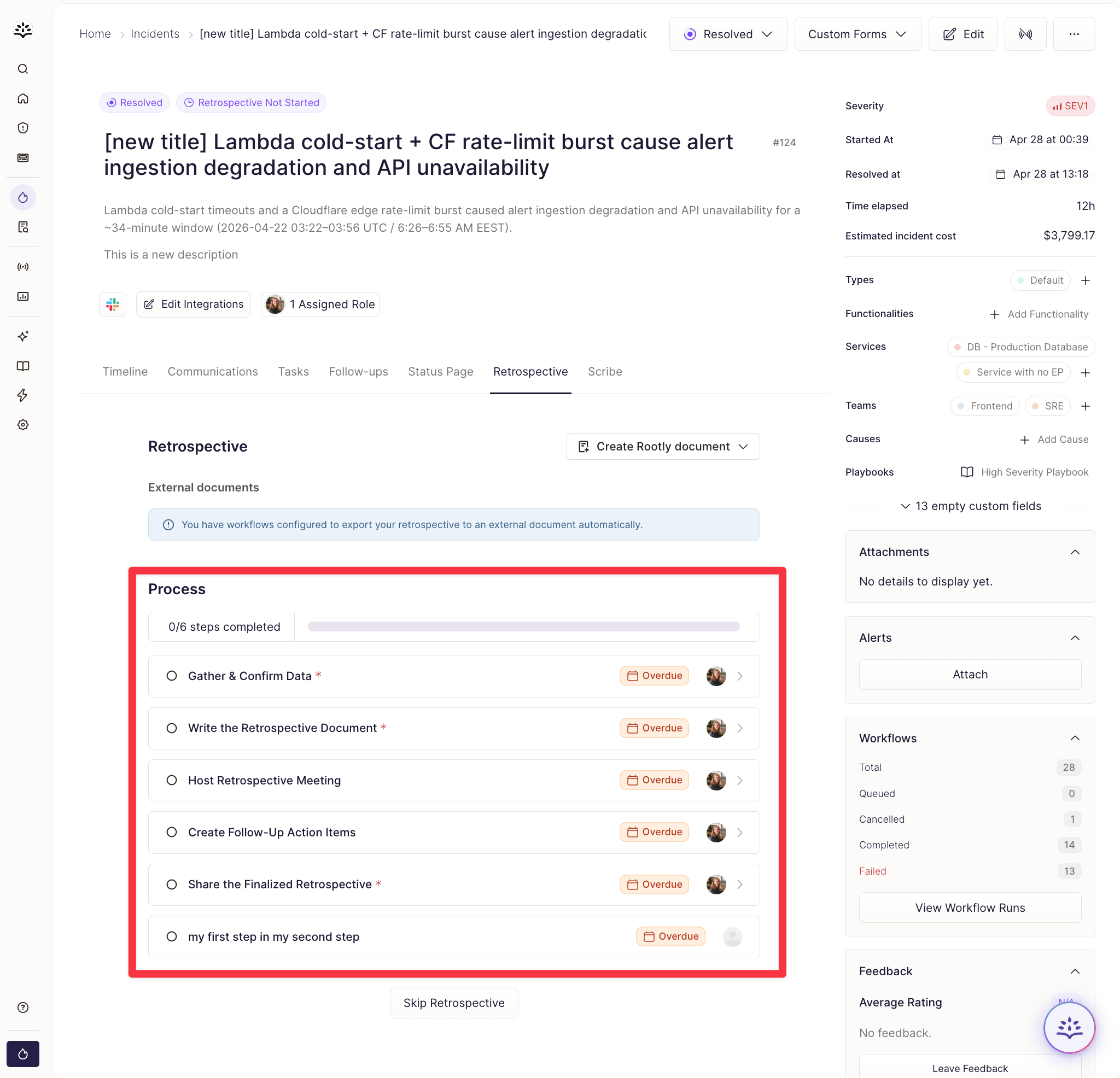
- A title and description
- Required or optional completion
- A default owner based on an Incident Role
- A due date based on when the incident was resolved
- Slack and email reminders for the step owner
Each Process must include at least one step.
Editing the Default Process
You are able to add additional steps to your Default Process: remember, the Default Process will be used if no other Custom Processes match the incident. Note that there are a few built-in steps in your Default Process. These steps are marked with aBuilt-In label in the Process editor.
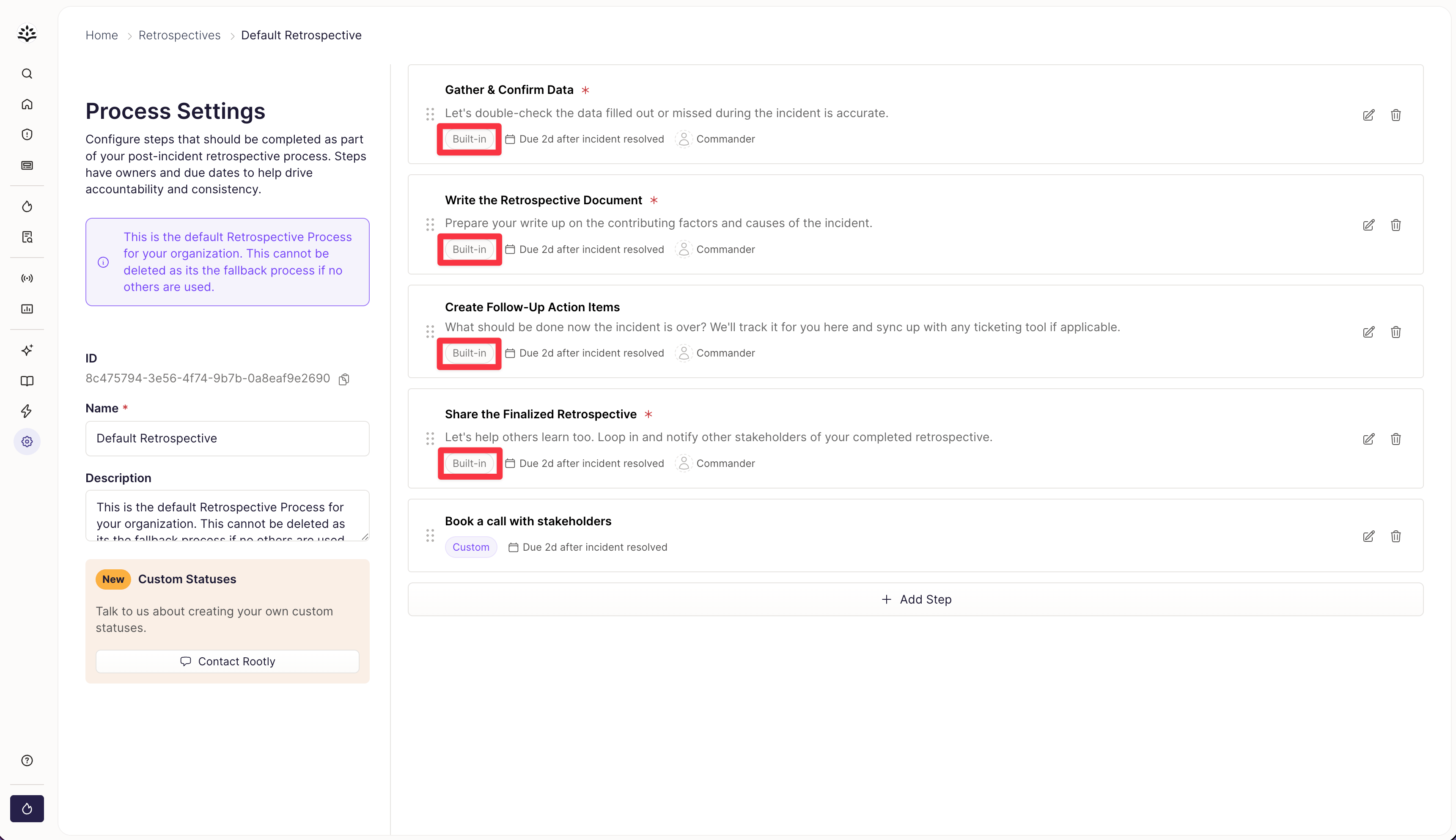
How Built-In Steps Are Displayed
Gather & Confirm Data
This step makes it easy for responders to fill out the necessary information for the incident. When viewing the Incident’s Retrospective tab, the ‘Edit Data’ button makes it easy to fill out all necessary incident data in one modal.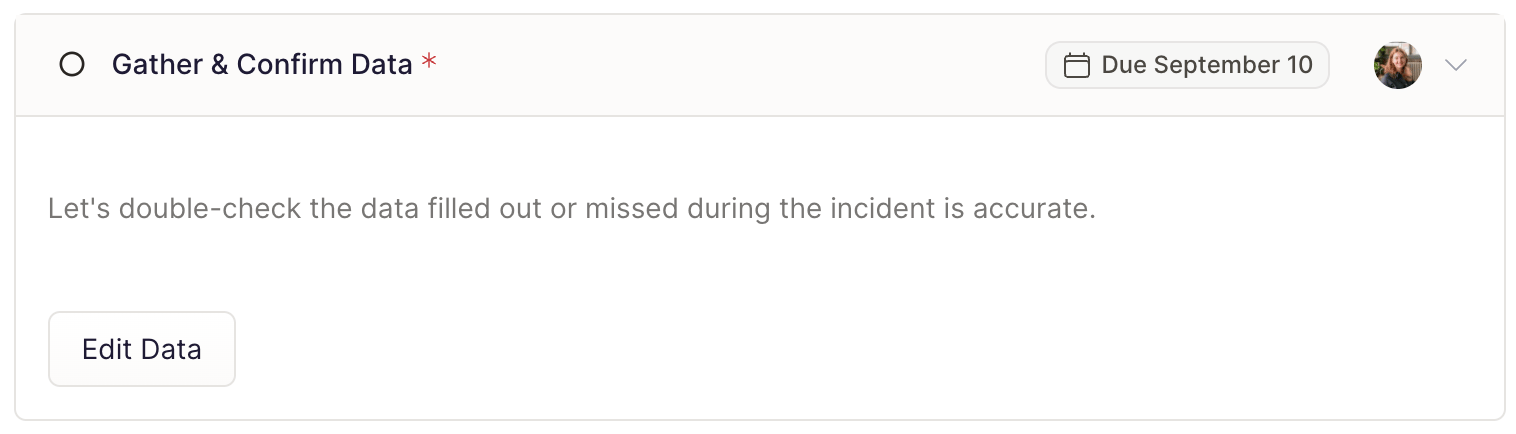
Write the Retrospective Document
This step links any retrospective documents for easy access.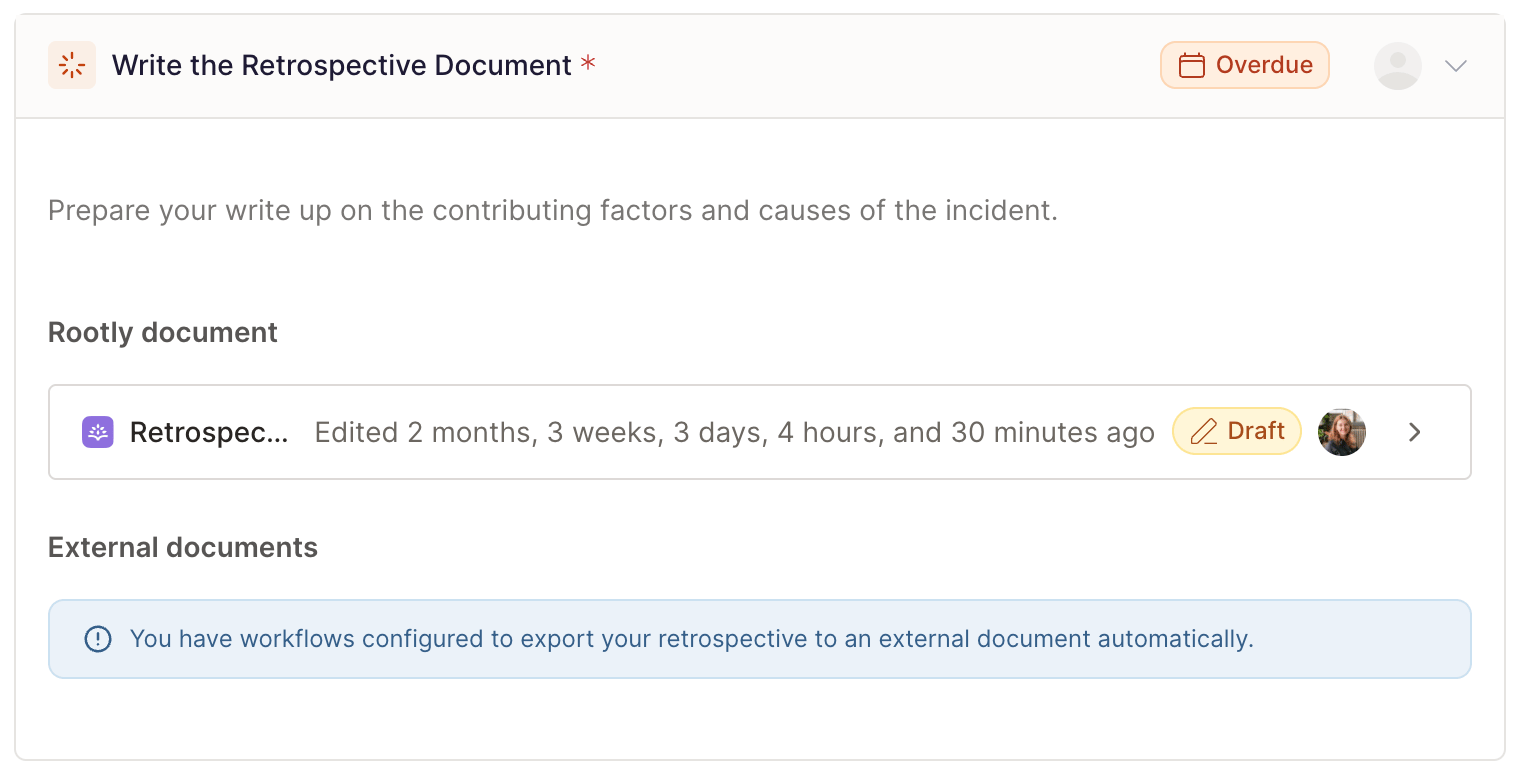
Create Follow-Up Action Items
Easily create any incident follow-ups from this step. You can easily view the current status, due date, and assignee from the step as well.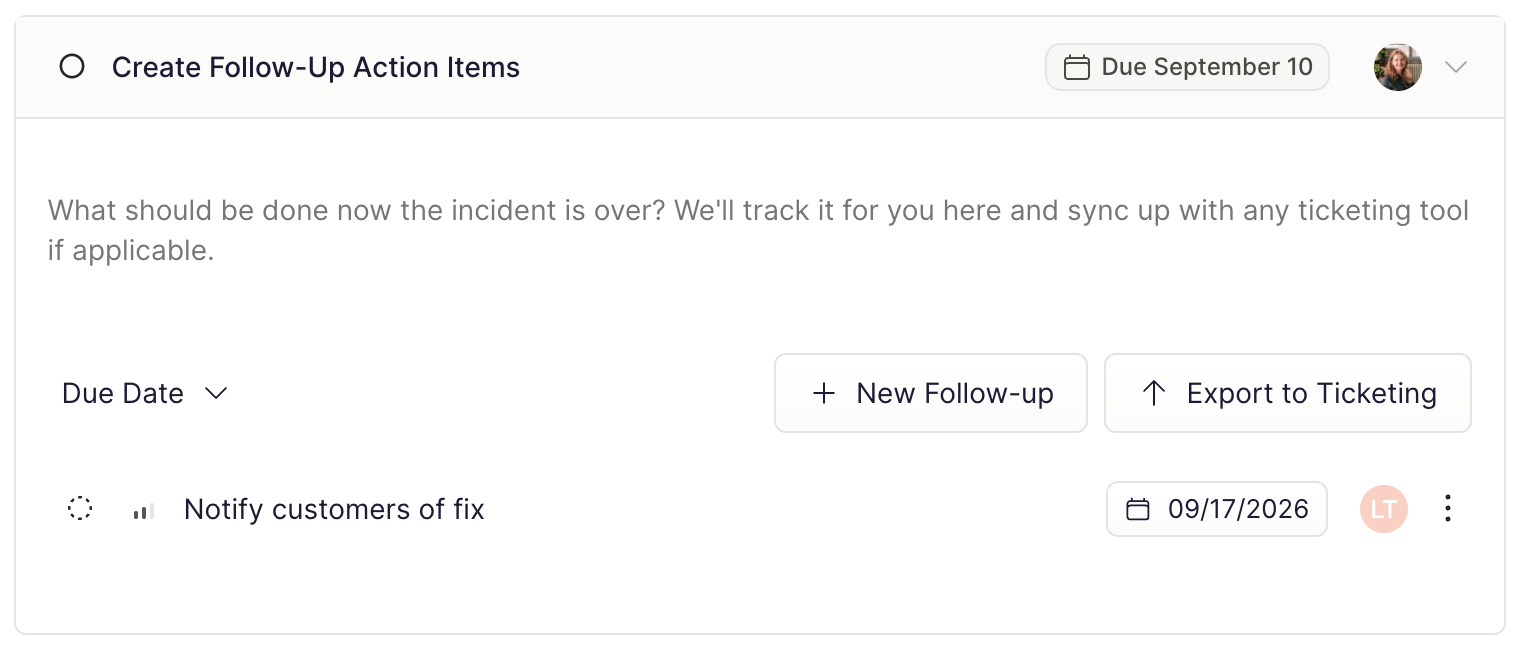
Share the Finalized Retrospective
Quickly publish any retrospective documents from this step.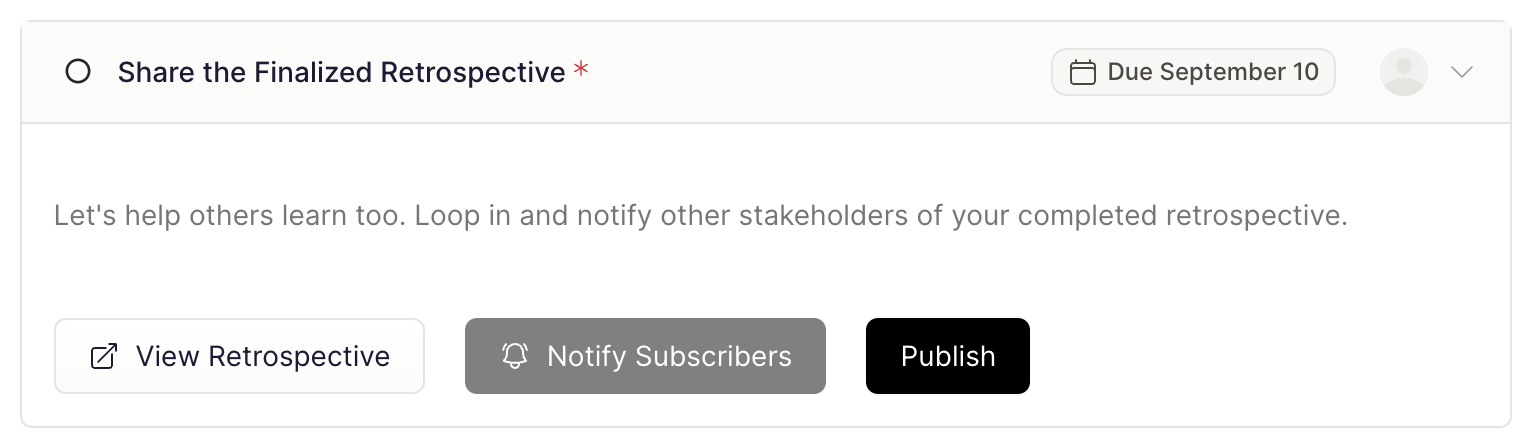
Editing Custom Processes
Step Configuration Options
Each step can be configured in several ways to support your team’s process.Title and Description
Use the title and description fields to clearly define what the step is for and what responders are expected to complete.Required or Optional Steps
Steps can be either required or optional:completion mode
The step must be completed before the retrospective can be fully resolved. The due date can still be adjusted.
completion mode
The step can be skipped if it is not needed for that incident.
Default Owner by Incident Role
You can assign a step to an Incident Role so the user holding that role on the incident becomes the default owner for the step. This helps automatically route work to the right responder without needing to manually assign each step.Due Dates
Step due dates are calculated relative to when the incident is resolved. Due dates are:- Based on business days after the incident is resolved
- Calculated using the team’s timezone
- Adjusted to business hours between 8am and 6pm
- Moved forward when they would otherwise fall on a weekend
Reminder Notifications
Steps can send reminders to the assigned owner on any combination of channels and timings:Slack | Email
Where reminders are delivered. Enable one or both — Slack for real-time nudges, email for durable ones.
Before | On | After the due date
When reminders are sent. Combine any of the three — for example, one reminder 24 hours before the due date, one on the due date, and one after it becomes overdue.
Process Phases With Custom Statuses
If your workspace uses Custom Statuses, you can assign each step to a Retrospective Status. This allows steps to appear in different resolved phases, such as:- Retrospective
- Follow-ups
Frequently Asked Questions
What can I configure for each process step?
What can I configure for each process step?
Each step can include a title, description, required or optional behavior, a default owner based on an Incident Role, a due date, and reminder notifications. These settings let you tailor each step to match your team’s retrospective workflow.
How are step due dates calculated?
How are step due dates calculated?
Due dates are based on business days after the incident is resolved. Rootly calculates them using the team’s timezone, keeps them within business hours, and skips weekends when determining the due date.
Who gets assigned to a step by default?
Who gets assigned to a step by default?
If a step is assigned to an Incident Role, the user holding that role on the incident becomes the default owner for the step. This helps automatically assign retrospective work to the right responder.
Can a step be optional?
Can a step be optional?
Yes. Optional steps can be skipped when they are not needed for a particular incident. Required steps must be completed before the retrospective can be resolved.
Can I delete all steps from a process?
Can I delete all steps from a process?
No. Every retrospective process must include at least one step. You can edit, reorder, or remove steps, but you cannot delete the last remaining step in the process.
What does the legacy process setup do?
What does the legacy process setup do?
The legacy setup creates a simplified two-step workflow by keeping only the data-gathering and retrospective-document steps in the default process. This is useful if you want a lighter process that resembles earlier retrospective behavior.