

Features
Automated Page Creation
Create Confluence pages automatically when incidents resolve or retrospectives begin.
Page Updates
Update existing Confluence pages with new incident data as the incident progresses.
Dynamic Content
Populate pages with incident data using Liquid variables — timeline, services, teams, and action items.
Template Support
Use Rootly’s built-in retrospective templates or your own templates built directly in Confluence.
Template Options
You have two approaches for retrospective content:- Rootly templates — Use pre-built retrospective templates defined in Rootly. These automatically include timeline visualization and follow-up action item tracking with no additional setup.
- Confluence templates — Build fully custom templates directly in Confluence using Liquid variables for dynamic content. Rootly fetches templates from your Confluence space via the API and applies them when creating pages.
If a Confluence template is selected in the workflow action, it overrides both the Custom Retrospective Template and the Rootly Retrospective Template fields.
Before You Begin
Rootly supports two Confluence deployment types:Installation
Choose the path that matches your deployment.Confluence Cloud
1
Open Rootly Integrations
Navigate to Configuration → Integrations in your Rootly dashboard.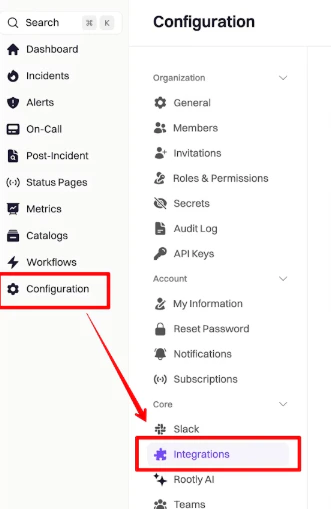
2
Find and set up Confluence
Search for Confluence and click Setup.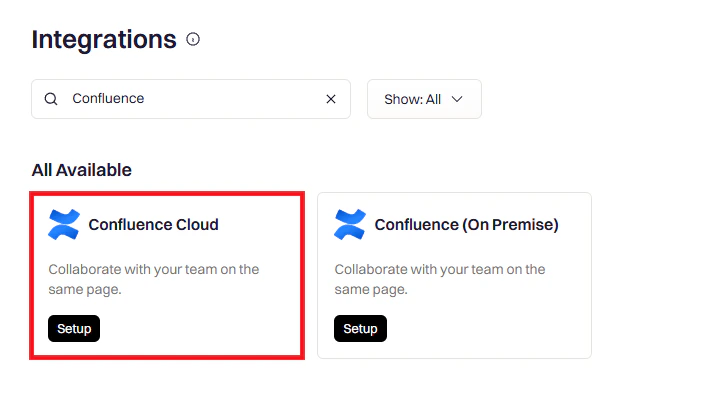
3
Authorize in Confluence
You will be redirected to Confluence to grant Rootly permission. Rootly requests the following OAuth scopes: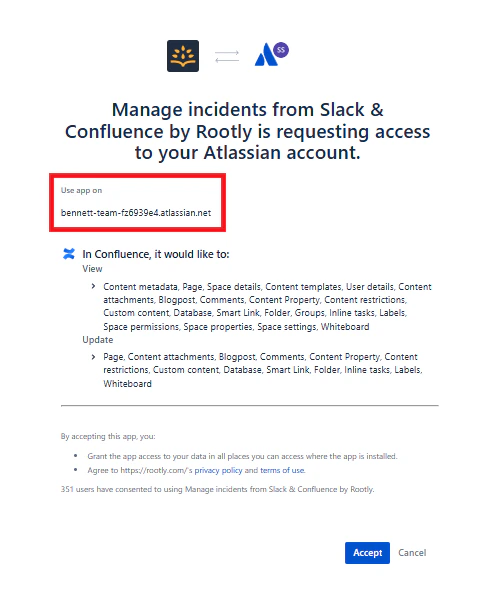
read:user:confluence— Read your user profileread:content-details:confluence— Read page contentwrite:content:confluence— Create and update pagesread:template:confluence— Read Confluence templatesread:space:confluence— Read spaceswrite:page:confluence— Create pages
4
Accept permissions
Click Accept to authorize Rootly.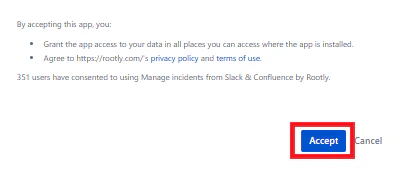
5
Confirm connection
You will be redirected back to Rootly with a confirmation message. The integration status will show Connected.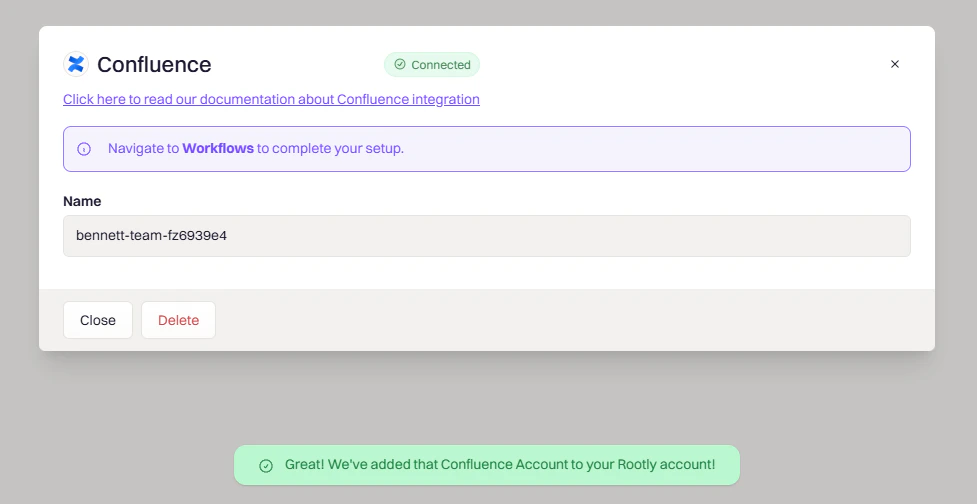
Confluence Server / Data Center
For on-premise deployments, Rootly supports authentication via Basic auth or a Personal Access Token (PAT).- Navigate to Configuration → Integrations and search for Confluence Server.
- Click Setup and enter your Confluence Server URL (for example,
https://confluence.yourcompany.com). - Enter your credentials:
- Basic auth: Username and password
- PAT: Generate a token in Confluence under Profile → Personal Access Tokens and paste it into the Token field
- Click Save and Test Connection to verify.
Personal Access Tokens expire after 90 days by default. Rootly will notify you when a token is approaching expiry. Rotate the token in Confluence and update it in Rootly to avoid workflow failures.
On-Premise Notes
If you run Atlassian Confluence Data Center (on-premise) rather than Confluence Cloud, the setup is the same as Confluence Cloud, with one difference: you authenticate using URL + username + password instead of the Cloud OAuth flow. If your Confluence server sits in a private network, allowlist Rootly’s IP addresses so Rootly can reach your instance:Creating Pages from Workflows
Workflows let you automate Confluence page creation and control exactly what information Rootly publishes during an incident. You can trigger a page creation when an incident resolves, when a retrospective begins, or on any other workflow event — and use Liquid variables to populate pages with live incident data.If you do not need advanced trigger or condition logic, skip to Step 4 to add the action directly.
Step 1: Create a Workflow
1
Open workflow creation
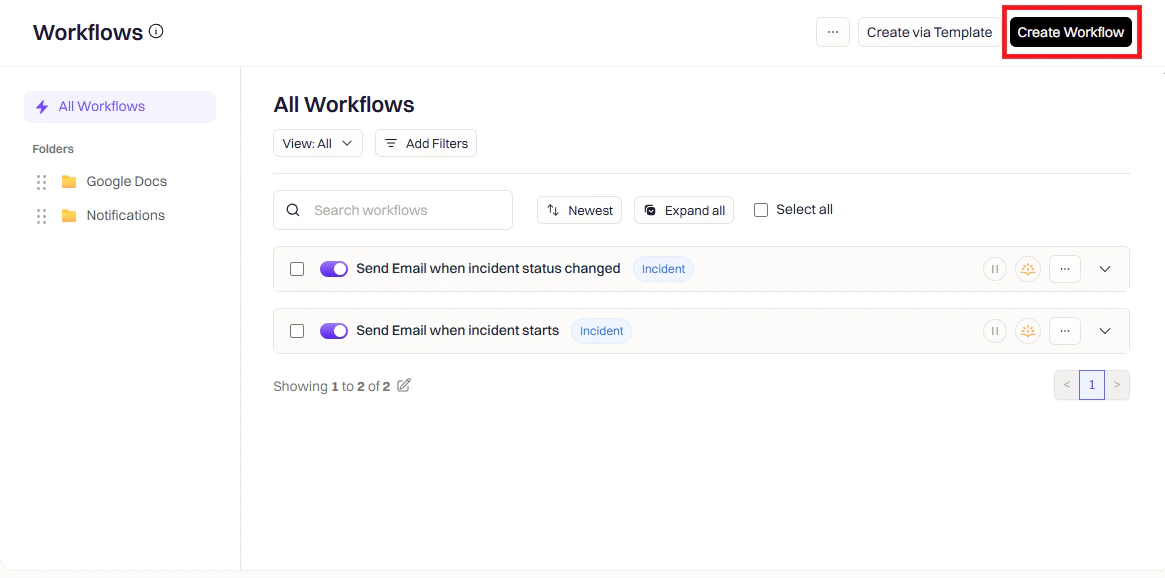
Navigate to Workflows in the Rootly sidebar and click Create Workflow.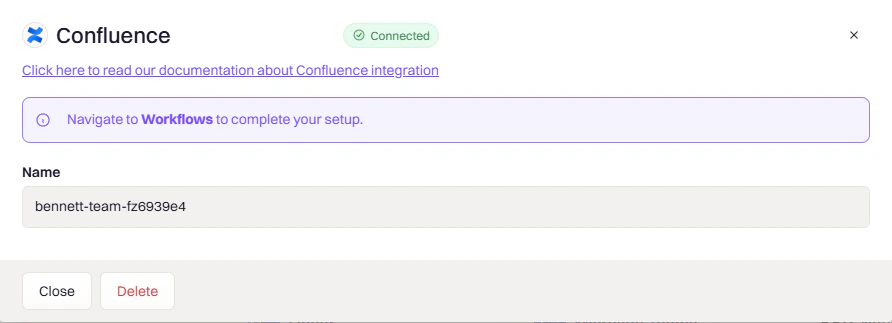
2
Choose a workflow type
Select the workflow type that matches your use case: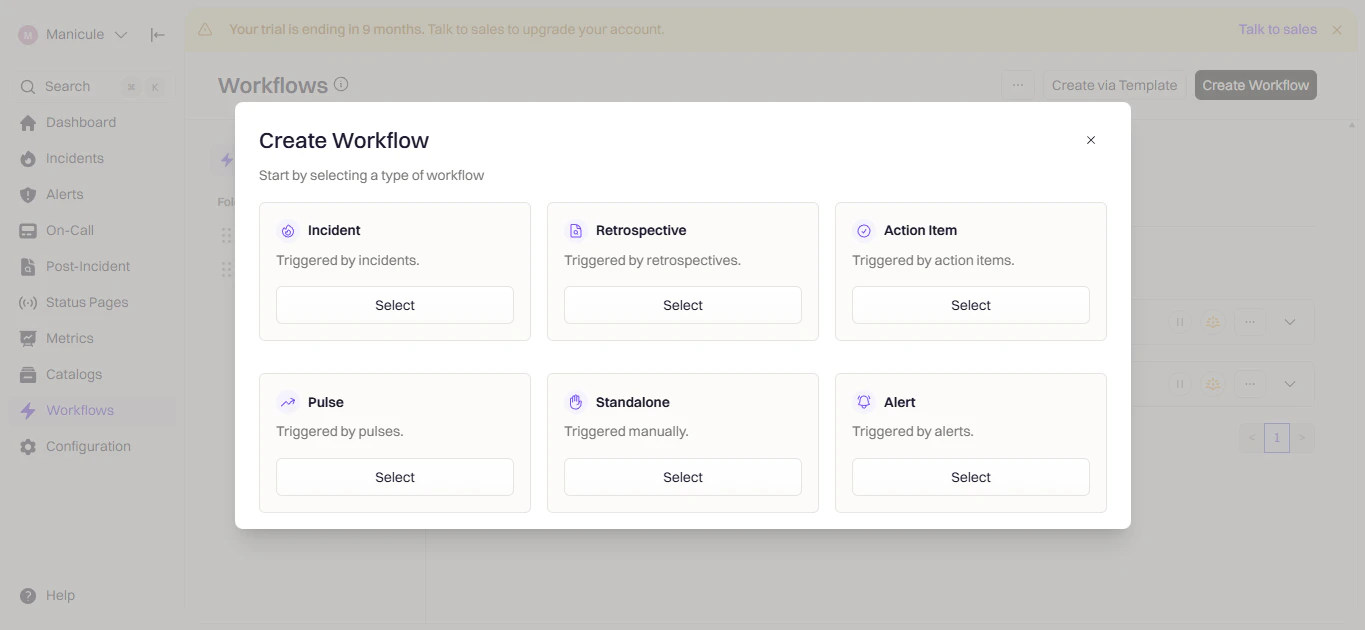
- Incident — trigger actions during active incidents
- Retrospective — trigger actions when a retrospective begins or changes status
- Pulse — trigger actions on a schedule
Step 2: Configure Triggers
Triggers define when the workflow runs.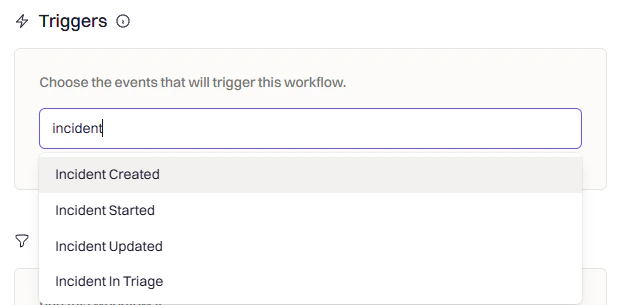
For retrospective pages, use Retrospective Status Changed with a condition of Status equals Started so pages are created when a retrospective kicks off.
Step 3: Add Conditions
Conditions let you refine when the workflow executes after a trigger fires.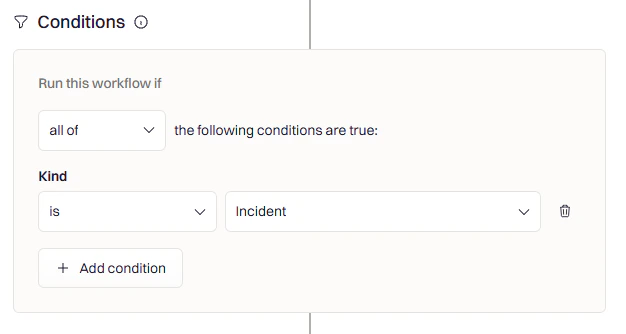
- Severity filter — only create a page for SEV-1 or SEV-2 incidents
- Team or service filter — scope page creation to incidents affecting specific teams or services
- Incident type — ensure the workflow only runs when Kind is set to Incident
- Environment — only generate pages for production or customer-impacting issues
Step 4: Add the Create Confluence Page Action
1
Add an action
Click Add Action and search for Confluence.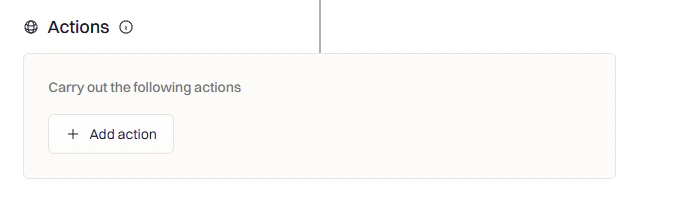
2
Select Create Confluence Page
Choose Create Confluence Page from the results.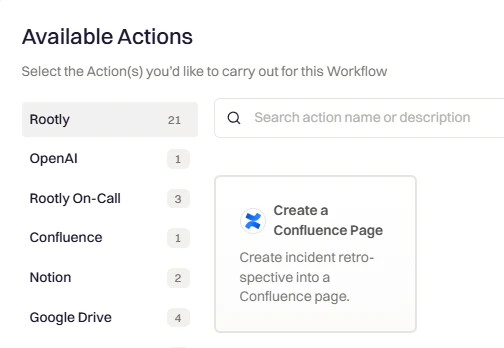
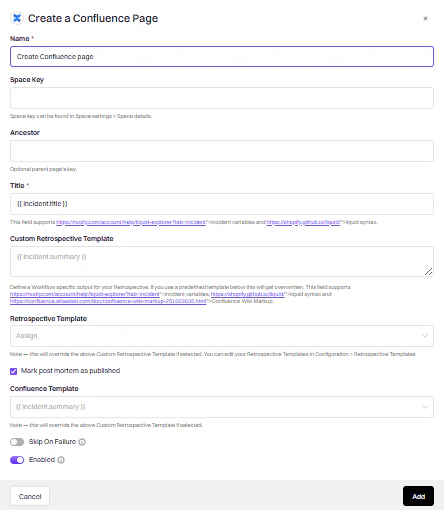
3
Configure the action
Fill in the fields using the table below.
4
Save the workflow
Click Add, enter a workflow name, and click Create Workflow.
Action Fields
Update an Existing Confluence Page
In addition to creating pages, Rootly can update pages that already exist. Add an Update Confluence Page action and configure the following fields:Creating a Confluence Template
Rootly fetches page templates directly from your Confluence space via the API. Templates you create in Confluence appear automatically in the Confluence Template dropdown within the workflow action.1
Open your Confluence space
Navigate to the space where you want to create the template and open Space Settings.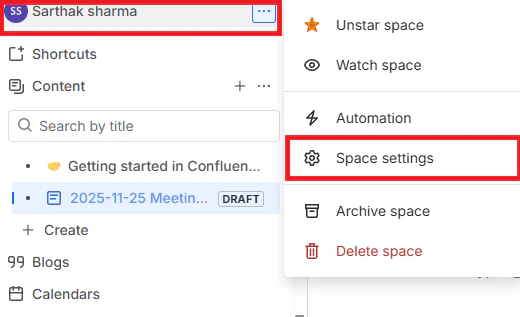
2
Access template settings
Under Look and Feel, select Templates.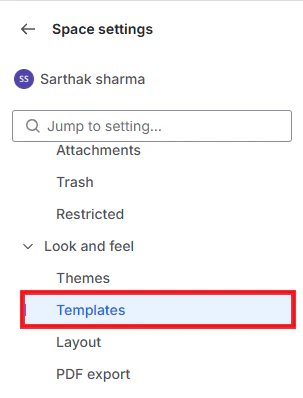
3
Create the template
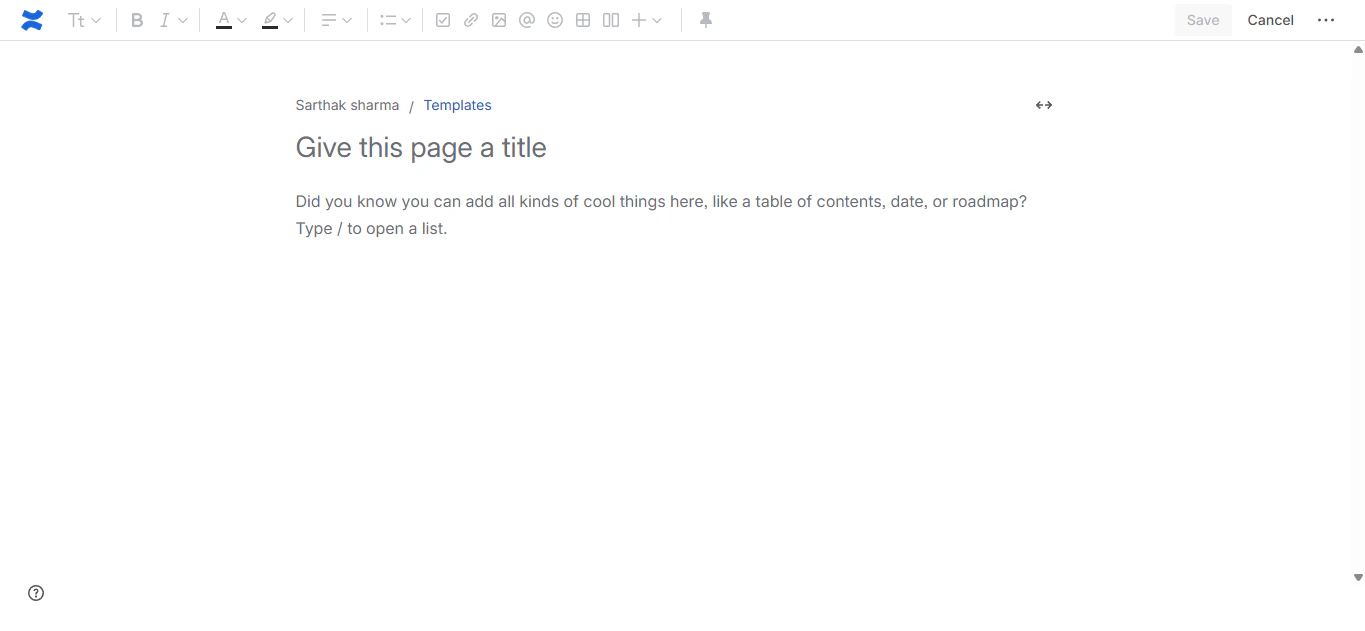
Click Create New Template and add your content. Liquid syntax is fully supported — use the Liquid Variable Explorer to test variables.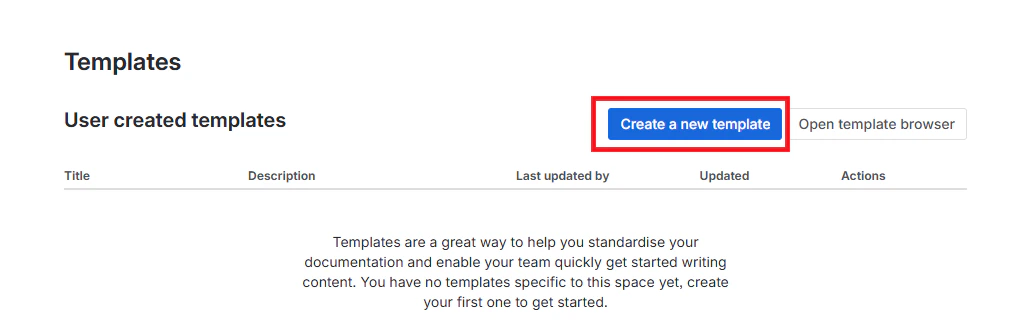
4
Save the template
Click Save. The template will appear in the Confluence Template dropdown the next time you configure a Create Confluence Page action.
Template Examples
Use the Liquid Variable Explorer to test variables before deploying templates in production.- Standard Retrospective
- Executive Summary
- Technical RCA
Troubleshooting
Server / Data Center connection fails
Server / Data Center connection fails
Verify the Confluence Server URL is reachable from Rootly’s servers — check any firewall or allowlist rules. Confirm SSL certificates are valid. For PAT authentication, ensure the token has not expired and has the required permissions.
Frequently Asked Questions
My Confluence template is not appearing in the dropdown
My Confluence template is not appearing in the dropdown
Rootly fetches templates from your Confluence space via the API. Ensure the template was saved in the correct space and that your Rootly integration has access to that space. Try disconnecting and reconnecting the integration to refresh the template list.
The workflow ran but no Confluence page was created
The workflow ran but no Confluence page was created
Check the workflow run log in Rootly for error details. Common causes include an invalid Space Key, a missing or incorrect Ancestor page ID, or a Liquid variable that returned an empty value for the Title field (Title is required). Verify the Space Key matches exactly what appears in Space Settings → Space Details in Confluence.
Liquid variables are rendering as blank on the page
Liquid variables are rendering as blank on the page
Use the Liquid Variable Explorer to verify that the variable returns a value for your incident. Some variables like
incident.resolved_at will be empty if the incident has not yet resolved. Add a fallback using Liquid filters (for example, {{ incident.resolved_at | default: "TBD" }}).Can I create a page in multiple spaces from one workflow?
Can I create a page in multiple spaces from one workflow?
Add multiple Create Confluence Page actions to the same workflow, each configured with a different Space Key. Each action runs sequentially and creates an independent page.
How do I reference a page created earlier in the same workflow?
How do I reference a page created earlier in the same workflow?
Use the Update Confluence Page action after a Create Confluence Page action. Reference the created page ID via Liquid using the output of the prior step.
Uninstall
To remove the Confluence integration:- Go to Configuration → Integrations and find Confluence
- Click the Connected button to reveal the disconnect option
- Click Delete
Disconnecting the integration does not delete existing Confluence pages created by Rootly. Those pages remain in your Confluence space.